
Videos
Astrological Overview and Forecast: November 9, 2026
As humanity is called to release old patterns of pride, drama, and self-absorption, the...


Excessive technology use, particularly zombie checking, can negatively impact mental health and well-being. By utilizing new screen time management tools and following a structured approach, individuals can identify and reduce unproductive screen habits, fostering healthier technology use in daily life.

Many individuals have altered their drinking habits recently, leading to a greater demand for support in cutting back or quitting alcohol. With various options available, understanding one's level of dependence is crucial to selecting the most effective approach, whether through self-help strategies, professional support, or medication.

Many people engage in 'zombie checking' their devices during moments of boredom, leading to excessive screen time with negative mental health effects. This article presents a structured approach to understanding and modifying technology habits using new screen time management tools to promote healthier usage patterns.

Nudging is a subtle yet powerful technique that influences people's choices without their conscious awareness. By employing social norms and changing decision environments, nudges can lead to better decisions in health, finance, and sustainability. Understanding how nudges work can empower organizations to promote positive behaviors effectively.

Recent research highlights the origins of callous-unemotional (CU) traits in children, linking them to fearlessness, social connection, and imitation behaviors. These traits can lead to antisocial behaviors, emphasizing the importance of nurturing positive social interactions and avoiding harsh parenting to foster emotional development.

Attachment theory, developed by John Bowlby, offers insights into how early caregiving shapes our emotional responses and relationship styles. Recognizing an individual's attachment style can lead to improved self-awareness and healthier interactions in adulthood, impacting everything from friendships to romantic partnerships.

Are you a borderline narcissist? Where does healthy self-love end and selfishness begin? After being accused of narcissism, Marie T. Russell examines the thin line between caring for ourselves and disregarding others, and what our choices reveal about how we live.

You can feel it in a tense kitchen, a strained text exchange, or the silence after someone says, "I am fine" when they clearly are not. The question of whether women are more emotionally intelligent than men is not just a cultural debate. It shapes relationships, work, parenting, and the way people learn to understand themselves.

Choosing to focus on commonalities rather than differences can transform perceptions of others. By recognizing shared desires and experiences, individuals can cultivate compassion and understanding, making it easier to overlook behaviors that may initially trigger judgment. This perspective fosters a sense of connection and encourages a more harmonious existence.

The quest for love often manifests as a need for attention, leading individuals down various paths, some constructive and others destructive. In a world where many feel neglected, the importance of nurturing love and attention in our communities has never been clearer. By focusing on positive engagement, society can address the root causes of violence and crime.

In a world filled with anxiety and uncertainty, individuals can reclaim their power through personal empowerment and intentional choices. Despite external chaos, focusing on peace, gratitude, and positive qualities can transform one's experience and influence the collective environment, fostering a healthier future for all.

The rise of smartphones has transformed communication, yet this convenience may be harming mental health and relationships. Studies suggest that electronic communication can lead to increased isolation and unhappiness, particularly among the iGen cohort, who are the first to grow up with these devices. Understanding these effects is crucial as society navigates this new normal.

When the world’s problems become overwhelming, shutting down can seem easier than feeling the pain. Not caring may actually be a form of self-protection. However, whether we act or remain silent, we are already making a difference. The question is: What kind of difference do we choose to make?
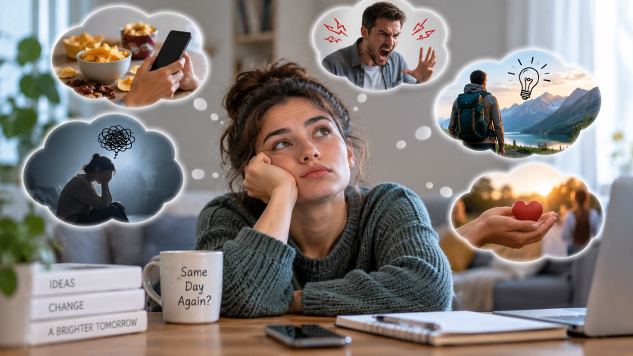
Boredom, often perceived as trivial, can significantly impact mental health and behavior. It can lead to impulsive actions, increased aggression, and even deeper existential reflections. However, it also fosters curiosity and the search for meaning, highlighting its complex role in psychological functioning. Understanding this duality can help navigate boredom's effects.

The rise of smartphones has transformed communication, yet this convenience may be harming mental health and relationships. Studies suggest that electronic communication can lead to increased isolation and unhappiness, particularly among the iGen cohort, who are the first to grow up with these devices. Understanding these effects is crucial as society navigates this new normal.

Why do we keep doing things we know aren't good for us? The answer may have less to do with weakness and more to do with habit, emotional soothing, and conditioning. Understanding why the pattern began can help us forgive ourselves and finally choose differently.

Not every child who sits apart from the group is struggling. Some children genuinely prefer solitude, and for years researchers assumed that preference was harmless. New findings complicate that picture in ways every parent and educator needs to understand.

You are not imagining it. There is something about the shift in seasons that makes everything feel heavier, sharper, or just different in ways you cannot quite name. If your stress seems to rise and fall with the calendar, science and centuries of human experience are both on your side.

The prevalence of smartphone photography during experiences can significantly affect how events are remembered and shape identities. While photos serve as external memory aids, they may lead to poorer recall and create a fixed narrative of individuals, impacting mental health and agency. Understanding these effects is essential for navigating the relationship with technology.

Emotion regulation is a vital psychological process that allows individuals to manage their feelings and responses. However, some people struggle with this ability, leading to mental health issues like anxiety and depression. Identifying the underlying neural mechanisms and the effectiveness of various strategies can provide insights into better management of emotions.

The concept of the world as a mirror suggests that our perceptions and experiences reflect our inner state. When we encounter negativity, it may indicate unresolved issues within us. This idea challenges us to examine our reactions, especially in parenting, and recognize how our emotions shape interactions with others.
As humanity is called to release old patterns of pride, drama, and self-absorption, the...

In the video, a woman carries a lantern along a rain-soaked path. Its glow reaches only...

In “Shades of Gray,” Gloria Travers & The North Street Band explore what can happen...

“Just Say Yes” is a music video from InnerSelf.com about the moment you stop...

A group of children chasing a soccer ball after school will show you everything you need...

Some politicians and activists warn that Muslims want to impose religion through law...

Why do we hide the truth, even from people we care about? Marie T. Russell begins with a...

Everyone has the capacity to access intuition and higher wisdom, which can be...
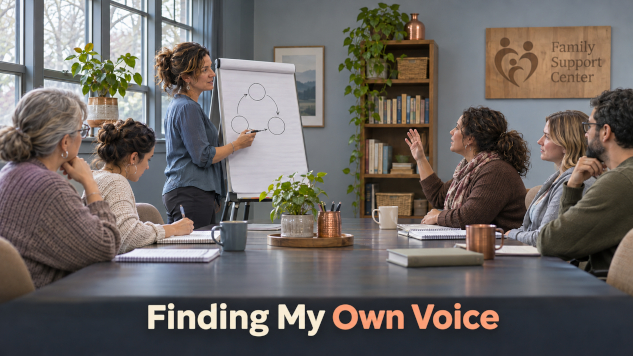
The journey of healing from domestic violence often involves reclaiming one's...