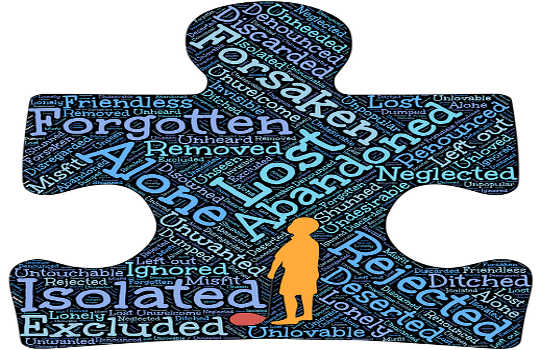

Did We Really Stop Caring?
When the world’s problems become overwhelming, shutting down can seem easier than feeling the pain. Not caring may actually be a form of self-protection. However, whether we act...

Parents often say that they don’t mind what their children do in life just as long as they are happy. Happiness and pleasure are almost universally seen as among the most precious human goods; only the most curmudgeonly would question whether benign enjoyment is anything other than a good thing. Disagreement soon creeps in, however, if you ask whether some forms of pleasure are better than others. Does it matter whether our pleasures are spiritual or carnal, intellectual or stupid? Or are all pleasures pretty much the same?
When Army surgeon Rhonda Cornum regained consciousness after her helicopter crashed, she looked up to see five Iraqi soldiers pointing rifles at her. It was 1991 and her Black Hawk had been shot down over the Iraqi desert. Dazed from blood loss, with a busted knee and two broken arms, the then-36-year-old medic was subjected to a mock execution by her captors, sexually assaulted, and kept prisoner in a bunker for a week.


We all know the most famous bit of ancient advice inscribed on the Temple of Apollo at Delphi: Know thyself. It’s a powerful and daunting recommendation. If you take it seriously, you will begin to push through all of the misconceptions you have, not only about yourself but about human beings generally. You will begin to think deeply about who you really are and who you ought to be.should be little wonder that this one command is the highest command of all philosophy: follow it like a religious law, and – one way or another – you will be a great philosopher.

As an academic - a researcher and senior lecturer at a university in the UK - people are often surprised by my unorthodox views on the nature of life, and of the world. For example, when I mention to colleagues that I’m open-minded about the possibility of some form of life after death, or that I believe in the possibility of paranormal phenomena such as telepathy or pre-cognition, they look at me as if I’ve told them I’m going to give up academia and become a truck driver.
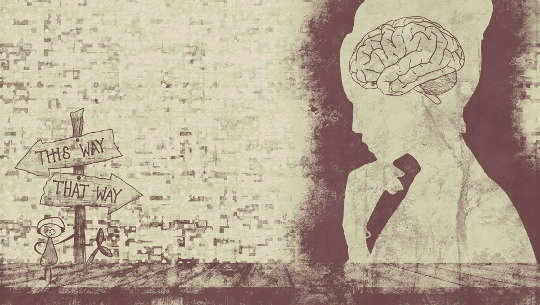
Anyone who has spent time around teenagers knows they don’t always consider the full consequences of their actions. Just consider the dozens of YouTube videos involving falling dressers or fireworks illustrating this fact. Adolescents are typically more focused on the potential benefits of a choice (it could go viral!), with little regard for the negatives (an emergency room visit at 2 am). It is easy, and completely understandable, to be frustrated with this sort of behavior. However, we can make more sense of this behavior–and perhaps gain more patience–when we consider findings on how the brain processes consequences and how this changes throughout adolescence.

You are made of energy that is constantly vibrating. This energy is changeable and transformative. It is amazing how our body, mind and soul has the ability to heal and change. Watching people change, heal and transform has been one of the most humbling and exciting experiences of my life.

Have you ever had a feeling something was definitely going to happen and it actually does? Have you ever had a dream and then seen it play out in your daily life? Have you ever avoided something horrible by listening to your intuition, even if you didn’t know what you were avoiding at the time? Chances are you probably dismissed such flashforwards as coincidence, but we all have the potential to sense and change our futures.

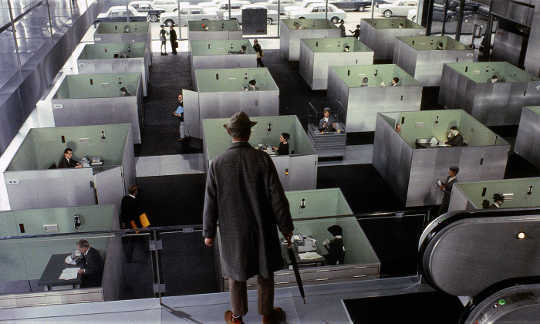
More and more companies, government agencies, educational institutions and philanthropic organisations are today in the grip of a new phenomenon. I’ve termed it ‘metric fixation’. The key components of metric fixation are the belief that it is possible – and desirable – to replace professional judgment (acquired through personal experience and talent) with numerical indicators of comparative performance based upon standardised data (metrics); and that the best way to motivate people within these organisations is by attaching rewards and penalties to their measured performance.

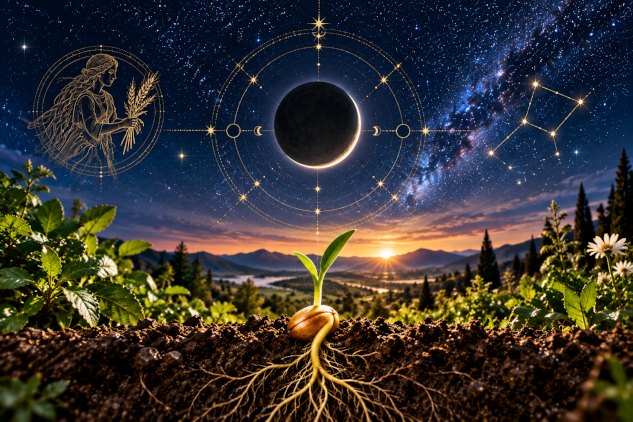
If you’ve felt confused in recent days (Neptune has been opposing the Sun so it’s quite likely!), this Moon sets out a clearer path ahead which starts right where we are, not in some distant place we think we should be by now! Delusions or self-deceptions are cast aside by this moon. We can see ourselves as we truly are and in doing so identify what’s needed to address challenges and capitalise on blessings.

Meditation needs great work. It is arduous, it is an uphill task. To remain non-meditative is easy in a way. You have not to do anything about it, you are already non-meditative, everybody is born non-meditative. But to become meditative really needs great courage, great determination, great patience, because to go beyond the mind is the most complicated phenomenon.

On average, men pick up on visual motion significantly faster than women do, according to a new study. Humans’ ability to notice moving objects has always been a useful skill, good for avoiding an animal predator in ancient times and crossing a busy street in the modern world.

We can only trace romantic love back to about a thousand years ago. Prior to that, there wasn't any romantic love. It's an idea that has been invented, like a philosophy or a religion. It has been made very special.

The image of the partner who is most attractive to you is buried deep within your unconscious mind. You began sketching this picture soon after your birth and before you were a teenager the composite was nearly complete. Your Imago has a dominant influence over the type of partner you seek, the way you relate to him, and how happy you will be together. The relationship script you wrote as a child is based on both the Imago you created and the childhood wounds you suffered.

Blessing is a way of sending unconditional love, peace, healing, goodness to a person or a situation, or simply seeing them bathed in that love. Blessing isn’t associated with any religious denominations. It can be practiced by anyone, and I have an atheist friend who purchased my first edition of The Gentle Art of Blessing, and even gave copies away!

"They may take our lives, but they will never take our freedom!" This often parodied quote from Mel Gibson’s William Wallace in the film Braveheart is something of a contradiction, and yet its sentiment is easy to understand. Nothing gets our hackles up more than being told that we have no choice over something.

It’s been said that whatever brings us to face the essential truth of our lives may be called “grace.” Frequently, grace assumes a form that feels more like a curse than a blessing. It can be a life-threatening illness, the loss of a family member, being fired from a job, the kids leaving home (or coming back), divorce, a serious accident, or any number of possible crises that can be encountered in one’s life.

A successful relationship has two very important components: learning to love yourself first, and then learning to love another person. Too many people ignore the first part, then wonder why it’s so hard to love another. It’s like expecting to water a plant with an empty water pitcher. Or trying to put on your child’s oxygen mask when the airplane cabin pressure drops, but passing out from lack of oxygen before you can get it on.

Acceptance is the hallmark of many Eastern teachings. And acceptance isn’t surrender — it’s the doorway to real, lasting change in our lives, relationships, and families.

The heart chakra is where matter and spirit meet. It marks the halfway point, with three chakras below and three above. This is a very important chakra indeed, as it’s our center of love and connection. Here you move into a greater awareness and love flows from you. You are peaceful, joyful, and compassionate. Your actions are no longer self-serving but are motivated by helping others overcome suffering.

Vulnerability isn’t timidity or weakness. Rather, it’s an acknowledgment that we are sensitive, alive, and affected emotionally by our interactions and experiences. When we are open and accessible, we are able to connect with ourselves, and we make it much easier for others to connect with us.

Even before toddlers can form a complete sentence, they’re attuned to how others may be judging them, according to a new study. The findings, which appear in Developmental Psychology, show that toddlers are sensitive to the opinions of others, and will modify their behavior accordingly when others are watching.