
Life Changes
Healing Through Storytelling: Lessons from The Odyssey
The journey of Odysseus in Homer's 'The Odyssey' offers profound insights into healing...








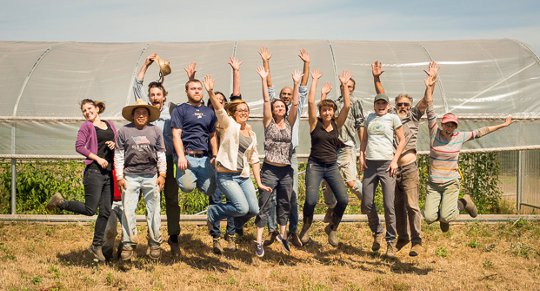 Narendra Varma loves chocolate. However, he’s also co-founder of Our Table Cooperative, a farm and grocery cooperative that aims to provide locally sourced, organically grown food to the city of Sherwood, Oregon. That means his love of chocolate is complicated.
 The Community Purchasing Alliance (CPA) in the greater Washington DC area helps over 130 churches, synagogues, schools and other institutions save money and make investments in environmental sustainability, worker equity, and community organizing.
 For years people have been running around Washington yelling that the United States was at risk of becoming Greece. There may actually be a basis for such concerns, but not for the reason usually given.
 A new batch of Australian five-year-olds has just started school, eager to learn to read and write. Unfortunately for them, English has one of the most difficult spelling systems of any language, thanks to the way it developed.
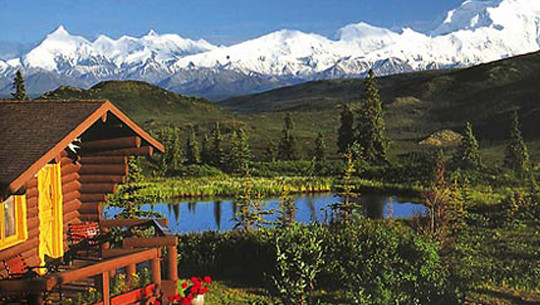 After 30 years, the practice of paying every resident—including children—at least $1,000 has made Alaska one of the least unequal states in America. Here's what the rest of us can learn.
 Not since the 1960s has a sitting President engaged in issues around higher education as frequently as Barack Obama. He’s had little choice.

An independent, civil society organization campaigning for a fairer sharing of wealth, power and resources, Share the World's Resources recently released Sharing As Our Common Cause, a report detailing all the ways sharing can act as a unifying force to address multiple planetary crises.
 After President Obama’s State of the Union Address Tuesday night, today’s discussion has largely focused on his tax proposals. While these are important measures, two other areas he addressed raise issues that will have at least as many consequences.
 It’s time to pay attention to a startling stealth killer. What’s the leading cause of death in low- and middle-income countries?

Farmers in the high Himalayas partner with a U.S.–based nonprofit to cultivate medicinal plants — and the environmental and economic benefits they offer. Nepalese residents learn cultivation skills needed to move their medicinal plant enterprises from foraging to farming — an environmental and economic win-win.
 No one disputes the importance of affordable access to high-speed internet for economic growth in the 21st century. The United States has seen consistent and rapid growth in its broadband infrastructure since the internet became popular in the 1990s, offering more households and businesses connectivity at faster speeds.
 The World Health Organization (WHO) has just released its Global Status Report on Noncommunicable Diseases, the second in a series tracking worldwide progress in the prevention and control of cancers, lung disease, diabetes and cardiovascular disease. It focuses on how to reach the internationally agreed overarching target of a 25% reduction of premature mortality from these four major non-communicable diseases by 2025.

One of the big end of the year sports news items was Jim Harbaugh leaving the San Francisco 49ers to become head football coach at the University of Michigan.
Let me tell you about this one stretch of Hillsborough Road in Durham, North Carolina. It’s between two freeways, just a short drive from the noble towers of Duke University, and in the space of about a mile, you will find a McDonald’s, a Cracker Barrel, a Wendy’s, a Chick-fil-A, an Arby’s, a Waffle House, a Bojangles’, a Biscuitville, a Subway, a Taco Bell, and a KFC.
With the holiday season upon us, the time for end of year lists is fast-approaching. To beat the rush, today I give my list of the top dead and enduring myths of 2014.

Religious aspects aside, for many people Christmas has been that unique time of the year when the demands of work finally disappear, if only for a brief period.

On the weekend of November 16th, the G20 leaders whisked into Brisbane, posed for their photo ops, approved some proposals, made a show of roundly disapproving of Russian President Vladimir Putin, and whisked out again. It was all so fast, they may not have known what they were endorsing when they rubber-stamped the Financial Stability Board’s “Adequacy of Loss-Absorbing Capacity of Global Systemically Important Banks in Resolution,” which completely changes the rules of banking.

The subprime crisis and the subsequent failure of Lehman Brothers came as such a shock – and the repercussions were so severe that when the time came to mount a response, policy makers were as surprised as the rest of us and woefully unprepared.

It’s no secret that the global population is ageing. We’re living longer than ever and are healthier until much later in life. But we’re still struggling to adapt to this changing demographic – and some are struggling more than most.

The fragmentation of global production has dramatically increased the length and complexity of supply chains. The Organisation for Economic Co-operation and Development (OECD) estimates that more than half of the world’s manufactured imports are intermediate goods.

Instead of loaning students money, the federal government could just pay for their tuition, without causing any significant economic problems. Last month, Lower Saxony became the final state in Germany to abolish tuition for all students at public universities.
The journey of Odysseus in Homer's 'The Odyssey' offers profound insights into healing...

Fostering a legacy of joy empowers individuals to inspire authentic self-expression in...

Junk emotions like anxiety, anger, and jealousy can hinder personal well-being and...

Awareness meditation shifts focus from traditional breath techniques to observing...

The exploration of precognitive dreaming reveals a profound interconnectedness within...
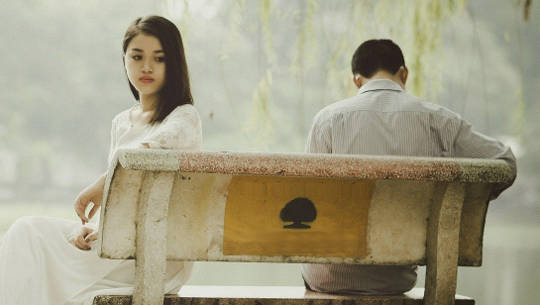
Negative moods can linger and affect overall well-being, but identifying their triggers...

A rare celestial formation is quietly reshaping the foundations of everything we know —...

You don't need a week in silence at a mountain retreat to feel spiritually alive again....