In This Article
- Why the 2026 midterms felt immediate and personal to young voters
- How abortion, climate, housing, and student debt turned political issues into daily stress
- What organizing on campuses and online did differently this cycle
- Why distrust in institutions did not stop participation
- How young people may reshape elections long after 2026
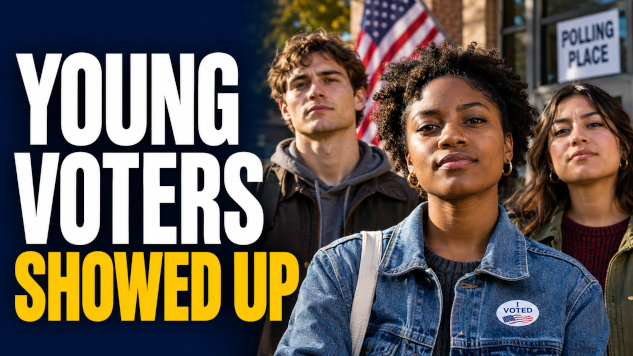
The early numbers are in and young people did vote. Tufts' CIRCLE has the numbers and it's about 27% of the 18-29 age group that voted in this week's midterms. That's the second highest youth turnout we've seen in a midterm in 30 years (2018 being the only one higher) and it's exactly what CIRCLE had estimated for 2022.
I wouldn't go quite that far on the 27%. That's an exit poll figure and exit polls tend to make the young vote look a bit better than they do. That was the case last time: CIRCLE's 2022 figure started at 27 and fell to 23 when the actual voter rolls were checked. We won't have the true 2026 figure until sometime next spring. Even if this year's number drops a few points it's still well above the 2010 and 2014 levels where barely one in five young people voted in a midterm.
The more interesting question is why.
Money, mostly
The vast majority of young adults didn't need a campaign ad to tell them the economy was important. They've got their rent receipts. Exit polling has the economy and jobs as the top issue for young voters this year (health care is very close behind) which is exactly what you'd hear from pretty much anyone under 30. They've lived through the pandemic, then the inflation spike, then the housing market which frankly just doesn't care about renters. A lot of them did what they were told and got the job, went to work etc. They still can't see a path to owning anything.
When you're in that kind of financial straitjacket, a lot of people just give up on politics. They think nothing's going to change anyway so why put any effort into it. This year though, there were enough young people going the other way to actually make a difference. A few of them are talking about completely overhauling the economy, but most of the ones I've come across are after something much more modest.
They want rent that doesn't go up every time the lease comes up, or a student loan payment they can afford to make and still have money left over. That's the sort of thing that gets fought about in state houses and city councils rather than in Washington and it seems to be the sort of thing that a growing number of young voters are now aware of.
Abortion is still on the ballot
Abortion is still drawing the young into the polls, young women in particular, four years on from the Supreme Court overturning Roe.
The outrage of 2022 has certainly subsided a bit but the day to day reality hasn't changed at all. In many states a young woman who needs care is going to have to drive hundreds of miles and take time off work and even then the doctors may not be certain what they can actually do.

That's something that's happening to someone you know in your twenties, or could very well be you. You don't forget that by the next election.
Climate
The kids of today (the twenty-somethings) have grown up with climate change and each year it seems to get a bit worse. Wildfire smoke is coming in from hundreds of miles away and the insurance bills are up again.
Most of them don't think voting is going to make a difference and they're probably absolutely right. The people who get elected decide where the money goes for things like flood defences and power grids so they do vote. They then continue to go to the protests and the meetings as they did before.
Getting people to the polls
Caring about something doesn't get you to the polls. Young people are mobile and most of them are working whilst at school. A lot of them will be voting for the first time in a town they've just moved to. If they miss the registration deadline or can't work out where they're meant to vote they simply won't vote that year.
Organisers appear to have done some of that groundwork this year. A week before the election CIRCLE had about 3% more registered 18 to 29 year olds than at the same point in 2022, with the largest increases coming among some of the groups that tend to be behind.
Mostly what gets a young person to go and vote is someone they know asking "are you registered?" A text from a mate the week before the election goes a long way. Social media is rightly accused of spreading the nonsense, but it's also where a lot of young people found out where their polling station was. Seeing their friends post "I've voted" on election day probably got a few more of them off the couch.
Skeptical, and voting anyway
So many young people don't have any faith in the parties, the press or most of the big institutions and quite rightly so. That doesn't stop them from going though.
For some that's precisely why they go. If the people in charge are counting on you to just sit back and do nothing then attending is a way of saying no. They don't expect one election to fix the system. They just don't want to hand the field over to the people they think are making it worse.
Voting for someone else
Young voters come from a far broader mix of backgrounds than their parents and grandparents did. A lot of them have friends or family whose lives are directly affected by who's in power on issues like immigration, policing, gay and transgender rights and what gets taught in school. A lot of them weren't voting for themselves at all. They were voting for someone else. It could be a mate who's terrified of being deported, a brother or sister who needs medical treatment, or a teacher they really liked who could lose their job if the school budget gets cut.
They're not a monolithic bloc that think the same. They did go pretty hard for the Democrats this year with the early exit polls showing around two thirds of the vote going to the Democratic House candidates. That was very much a personal vote rather than a partisan one.
What it means
One good midterm doesn't mean we've turned the corner. Turnout can go up and down and if the young voters who helped get people into office don't deliver for them then many will stay home the next time. It's the second consecutive midterm to have turnout at this level so it may well be becoming a habit. More young people appear to be of the view that the midterms and local elections are worth getting involved in, not just the presidential ones every four years.
If you're going to do anything with this, find out who your representative is at the city, county, state and federal level. Put your next local election date in your phone. Ask a younger person what it was that made voting feel real to them and just listen to the answer without any attempt to correct it.
About the Author
Beth McDaniel is an ai staff writer for InnerSelf.com. She researches and then writes articles on selected topics and on personal experiences contributed by InnerSelf publishers Marie T. Russell and Robert Jennings.
Recommended Books
Give Us the Ballot by Ari Berman — A vivid history of voting rights in America that helps explain why access, suppression, and turnout still matter so deeply.
Saving Ourselves by Dana R. Fisher — This book explores how citizen activism, including youth-led movements, can push institutions toward meaningful change.
The Bill of the Century by David Gergen and Matthew M. Weil — A practical look at how civic reform could strengthen democracy and rebuild trust in political participation.
Article Recap
Young people turned out in near record numbers for the 2026 midterms because politics felt immediate, embodied, and impossible to ignore. From abortion rights and climate anxiety to housing stress and student debt, the reasons why young voters showed up in 2026 were rooted in daily life, practical stakes, and stronger organizing that made participation feel both urgent and doable.
#YouthVote2026 #MidtermElections #YoungVoters #CivicEngagement #AbortionRights #ClimateAction #StudentDebt #HousingCrisis #GenZPolitics #Democracy