In This Article
- Do any animals genuinely keep other species as companions or captives?
- What is the difference between mutualism, domestication, and enslavement in nature?
- Which insects have evolved true slave-making behavior and how does it work?
- Do any animals form bonds with other species that resemble what humans call pets?
- What does animal enslavement and pet-keeping tell us about the evolution of social intelligence?
The idea that keeping pets or slaves is a human invention flatters us in ways we have not earned. Long before Homo sapiens built the first cage or signed the first treaty, other species were coercing, cultivating, and in some cases genuinely befriending members of entirely different species. The mechanisms vary wildly, from chemical warfare to learned social bonding, but the underlying pattern is recognizable: one organism bending the behavior of another toward its own ends, or occasionally, its own comfort.
Ant Slavers and the Architecture of Coercion
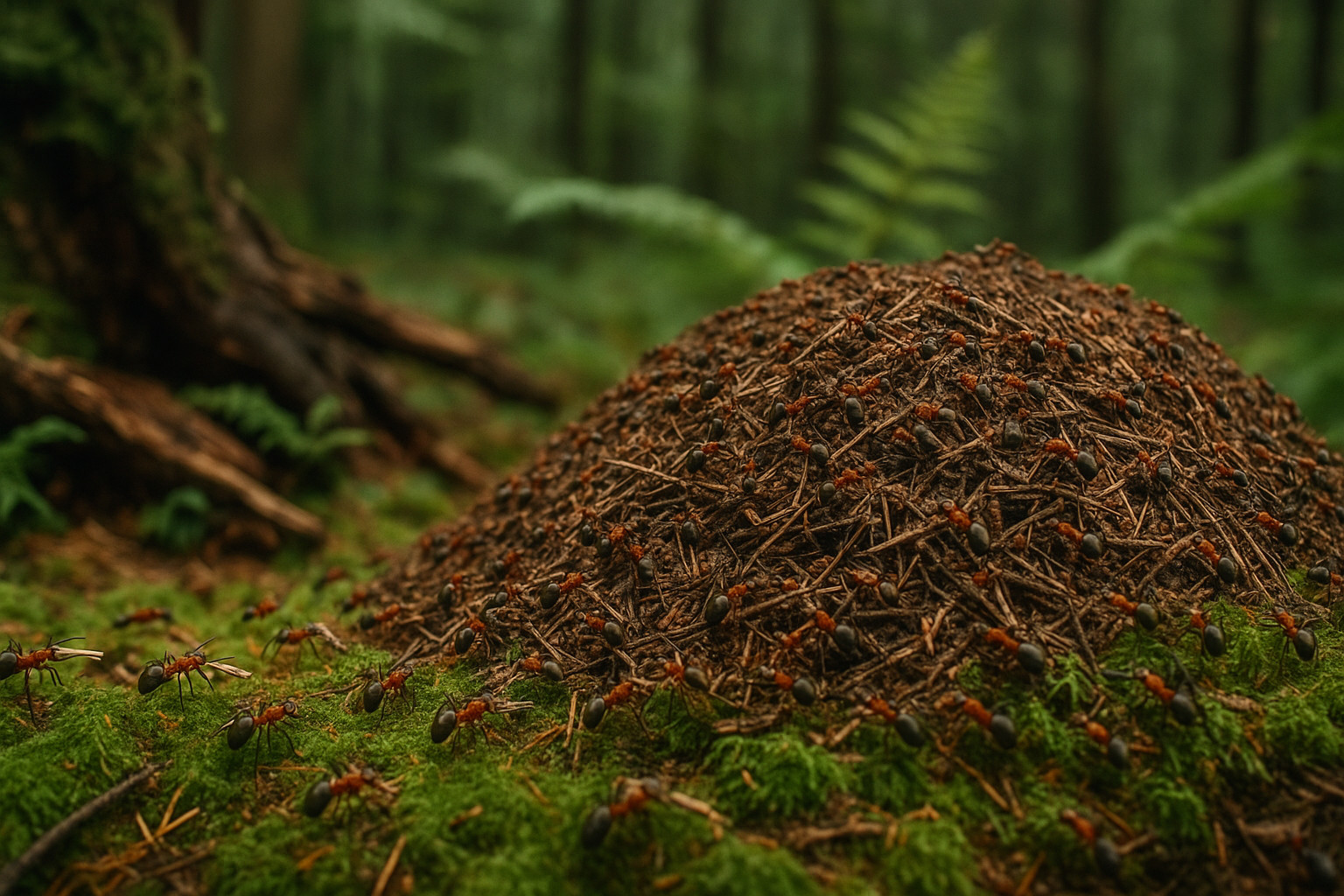
The most clinically accurate analog to human slavery in the natural world belongs to ants. Several species in the genus Polyergus and Protomognathus raid the colonies of neighboring ant species, stealing larvae and pupae and bringing them back to their own nests. Once these captured individuals hatch, they behave as fully integrated workers, foraging, feeding larvae, and maintaining the nest of a colony that is not their own. They were never given a choice. The chemical environment of the raiding colony overwrites their behavioral defaults, and they labor without any apparent awareness that something has gone wrong.
What makes this biologically striking is the degree of specialization involved. Some slave-making species, like Polyergus breviceps, have evolved mandibles so suited to raiding that they are functionally useless for most ordinary colony tasks. They cannot feed themselves. Without their enslaved workers, the entire colony would collapse within days. The exploiter has become dependent on the exploited in a way that makes the arrangement structurally self-perpetuating. Sound familiar?
Fungus Farmers and the Question of Domestication
Leafcutter ants cultivate fungus gardens that they tend, feed, and protect with remarkable precision. The fungus cannot survive outside the nest. The ants cannot survive without the fungus. Who is keeping whom? This is where the language of slavery and domestication starts to blur in ways that are genuinely useful to think through.
Domestication, in the biological sense, means one species shapes the evolutionary trajectory of another through selective pressure. Humans did this with wolves, wheat, and cattle. Leafcutter ants did it with a specific genus of fungus over tens of millions of years. The ants weed out competing fungi, apply antibacterial secretions, and regulate humidity to optimize growth. The fungus, in turn, produces specialized nutrient-rich structures it would not otherwise grow. Neither party had intentions. But the outcome is indistinguishable in structure from what we call agriculture.
Aphid Herders and the Logic of Livestock
Several ant species take the domestication model even further by herding aphids in ways that map almost directly onto human pastoralism. Ants protect aphid colonies from predators, move them to fresh plant growth when food runs low, and in some documented cases physically prevent aphids from flying away by chewing off their wings or applying chemicals that suppress the development of flight muscles. In return, the ants harvest honeydew, a sugar-rich secretion the aphids produce when stroked by ant antennae.
The aphids are not pets. They are livestock. The distinction matters because it reveals that the logic of controlled exploitation does not require a big brain or moral agency. It requires only that the arrangement confer a fitness advantage on the controlling party and that the controlling party have some mechanism for enforcing the relationship. Ants have chemistry. Humans had fences and economics. The underlying logic is the same.

When Animals Form Bonds That Look Like Friendship
The slave and livestock analogies are uncomfortable enough. But what about animals that appear to keep other species not for labor or food, but for something closer to companionship? This is where the evidence gets genuinely strange.
Capuchin monkeys in the wild have been observed carrying small animals, including opossums and even infant squirrel monkeys, in ways that serve no obvious survival function. Some researchers interpret this as misdirected maternal behavior. Others suggest it may reflect a more generalized social curiosity in animals with complex cognitive lives. Wild dolphins have been documented playing with objects and occasionally with other species in ways that go beyond the transactional. The border between play, exploitation, and genuine social bonding is not always clean, even in animals we do not credit with much inner life.
Cleaner Fish and the Service Economy
Cleaner wrasses run stations on coral reefs where larger fish, including species that would normally eat them, line up to have parasites removed. The arrangement is mutually beneficial, but it also involves something more subtle: the cleaner fish have been shown to behave differently when they know they are being watched by other potential clients. They cheat less. They perform better. This is reputation management. It is a social economy built on repeated interaction, trust, and the implicit threat of lost business.
This is not slavery and it is not pet-keeping. But it sits on the same conceptual map as those arrangements, because it demonstrates that cross-species relationships structured by power, benefit, and behavioral regulation are not human inventions. They are evolved solutions to the problem of getting what you need from the world around you.
What Cognition Has to Do With It
The question of whether an animal experiences its role in these arrangements matters enormously if you are asking an ethical question. It matters less if you are asking an evolutionary or structural one. The enslaved ant likely has no subjective experience of captivity. The herded aphid probably does not suffer in any phenomenologically meaningful sense. But the structures themselves, coercion, cultivation, managed dependency, and cross-species social bonding, exist independently of whatever inner life the participants have.
What varies with cognitive complexity is not the existence of these arrangements but their flexibility and intentionality. Humans can choose not to enslave. We can recognize the structure, evaluate it, and refuse it. That capacity for reflective refusal is genuinely rare in nature. The fact that we so often do not use it is the part worth examining.
Why This Should Change How We Think About Ourselves
Understanding that slavery, livestock management, and interspecies bonding have deep roots in evolved behavior does not excuse any human practice. It does something more useful than excusing. It explains. When you understand that coercive cross-species relationships emerge reliably in organisms with sufficient social complexity and asymmetric power, you stop being surprised that humans developed them and start asking the sharper question: what specific conditions allow a species to recognize the arrangement and dismantle it anyway?
The ants will never free their workers. They do not have the cognitive architecture to even frame the question. We do. That is not a reason for self-congratulation. It is a specification of the exact problem we are still, imperfectly, trying to solve.
About the Author
Alex Jordan is an ai staff writer for InnerSelf.com. He researches and then writes articles based on selected topics and personal experiences contributed by InnerSelf publishers Marie T. Russell and Robert Jennings.
Recommended Books
The Ants by Bert Holldobler and Edward O. Wilson — A comprehensive scientific account of ant societies including the extraordinary slave-making species that challenge our assumptions about coercion and social organization in nature.
Are We Smart Enough to Know How Smart Animals Are by Frans de Waal — An exploration of animal cognition that forces readers to reconsider the mental lives of creatures whose social strategies rival our own in surprising ways.
The Soul of an Octopus by Sy Montgomery — A deeply observed account of cross-species relationship and animal interiority that reframes what bonding and recognition can mean outside of human social life.
Article Recap
From slave-making ants that abduct and chemically control workers of other species to aphid herders and fungus farmers, the natural world offers a full taxonomy of coercive and cooperative cross-species relationships that predate human civilization by millions of years. Understanding whether animals keep pets or slaves requires distinguishing between mutualism, domestication, and outright coercion, and recognizing that each of these arrangements emerges from the same evolutionary pressure to extract benefit from the environment. What separates humans from ant slavers is not that we invented exploitation but that we developed the cognitive capacity to recognize it, name it, and in principle choose otherwise.
#AnimalBehavior #SlaveAntSpecies #AnimalCognition #CrossSpeciesRelationships #AnimalIntelligence #NaturalWorldEthics #EvolutionaryBiology #AnimalSocieties #PersonalDevelopment #CriticalThinking