
Life Changes
Healing Through Storytelling: Lessons from The Odyssey
The journey of Odysseus in Homer's 'The Odyssey' offers profound insights into healing...









Self-validation is crucial for emotional health, allowing individuals to accept their feelings, thoughts, and needs without judgment. By nurturing oneself with compassion and understanding, one can alleviate self-criticism and foster a healthier relationship with emotions, ultimately leading to better life choices and reduced emotional reactivity.

Anger often stems from disappointment and feelings of inferiority, revealing a lack of psychological education and self-worth. By analyzing anger and embracing forgiveness, individuals can heal and open themselves to love. This article provides practical steps to transform negative impulses into positive actions and cultivate a more fulfilling life.

When life swings between chaos and calm, peace begins at the still point within. This article by Marie T. Russell explores how to quiet fear, trust life’s flow, and find balance amid uncertainty — discovering that the center of the pendulum is where true freedom and serenity reside.

Discover how letting go of your mental calculator frees you from resentment, brings balance through karma, and invites inner peace through forgiveness and self-love.

In a fast-paced world filled with demands and distractions, reconnecting with our innate goodness can offer significant stress relief. Engaging in acts of kindness not only benefits others but also enhances our own well-being, leading to a happier, healthier life. Embracing the practice of giving can help counteract the pressures of modern society.

A recent study reveals promising methods to reduce the impact of traumatic memories by leveraging indirect reactivation techniques. Researchers propose that these techniques could not only dampen fear responses but also create opportunities to alter or potentially erase traumatic memories, offering hope for more effective therapeutic interventions.
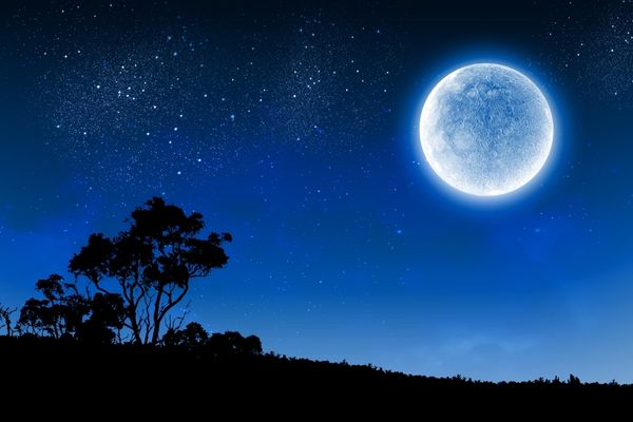
You look up at the bright round moon and feel it tug at something ancient in you. Are you supposed to sleep worse tonight, or feel a little wild, or clear out old emotions under its glow. Full moons come with a suitcase of stories. Some soothe, some spook, and some simply sell. What is actually true, and what is a lovely myth we keep passing along.

An NFL player's journey from physical and mental struggle to self-discovery through yoga reveals the importance of mindfulness, self-compassion, and finding joy in the present. By embracing a new philosophy, he learned to redefine success and cultivate a fulfilling life beyond football.

The article explores the enduring presence of the sacred in life and the importance of reconnecting with this spiritual essence. It highlights the wisdom of indigenous cultures and collective intelligence, emphasizing how individuals can restore their relationship with the living universe and embrace a more unified existence beyond ego-driven separateness.

You have tasted it in small ways a quiet walk that felt like the world was newly washed or a moment of breath when time softened around the edges. Higher states of consciousness are not far off mountaintops reserved for the rare. They are nearby rooms of the same house you already live in. Visit them on purpose and your perceptions change in practical, beautiful ways.

Find your calm by wiping the slate clean. This gentle guide shows how to release past grievances, quiet the mind, and rediscover peace by “starting at zero” — each day, each moment, a new beginning.

Picture an army built like a flexed bicep: loud, showy, and forever spoiling for a fight. It looks tough on a poster and brittle in the field. Macho warriorism sells a fantasy of courage that confuses swagger with strength, noise with competence, and impulse with leadership. Modern defense runs on capacity—trained people, reliable logistics, clear law, disciplined restraint, and smart alliances. Bravado burns that down. It wastes talent, invites errors, and turns neighbors into enemies. If we want a force that wins in the real world, we have to retire the costume and fund the craft.

You slam your thumb in the car door and before your brain even registers what happened, the word is out. Sharp, loud, oddly satisfying. You weren't planning to swear. You weren't even thinking about it. But there it was, erupting from some place deeper than conscious choice. Most of us were taught that swearing is crude, immature, a sign of poor vocabulary or worse character.

You know that fidgety feeling when the line won’t move, the email takes forever, or a season of life won’t hurry up? Patience isn’t just good manners; it’s good medicine. When you learn to wait with a softer body and a kinder story, your breath deepens, your sleep smooths out, and your choices feel less reactive. This is a warm, practical guide to making patience your daily superpower.

We love certainty. Give us a clear answer, a simple explanation, a five-step plan, and we feel safe. But life doesn't work that way. The truth is, nothing is as simple, or as complex, as it seems. We spend our days swinging between two extremes: reducing everything to bumper-sticker wisdom or drowning in overthinking that leads nowhere.

In a world of endless noise, rising prices, political chaos, and ecological unraveling, anxiety has become the national soundtrack. But what if anxiety isn’t a disorder, it’s a message? What if feeling uneasy is the only sane response to a system built on instability? This article digs beneath the symptoms to uncover what we’re really afraid of, and how reconnection can set us free.

We have been sold the idea that wellbeing is a program you complete, a checklist you follow, and a mood you are supposed to produce on schedule. But real wellbeing rarely arrives on command. It grows when we stop chasing happiness like a product and start living in quiet alignment with what actually sustains us. The goal is not constant positivity. The goal is a life that can hold both joy and struggle without breaking.

Judging others — and ourselves — is one of humanity’s oldest habits, but it’s also one of the heaviest burdens we carry. Letting go of judgment isn’t about apathy; it’s about freeing ourselves from the need to control and opening space for peace and compassion. By allowing others to walk their own path, we reclaim our energy, nurture our growth, and cultivate deeper harmony in our relationships and within ourselves.

Bullying isn’t just an event—it leaves a lasting imprint on personality. Both the bullied and the bully undergo profound shifts in character and behavior. Victims often become more withdrawn and anxious, while bullies internalize aggression as normal. These effects ripple into adulthood, shaping how people relate, trust, and thrive. Understanding bullying’s personality impact is key to healing and breaking the cycle of harm.

We spend our days trying to avoid boredom, but science shows healthy boredom is a powerful ally. Creative rest gives your nervous system time to reset, reduces stress, and sparks fresh insights. By welcoming life’s pauses instead of resisting them, we gain clarity, creativity, and inner balance. Maybe the moments we call “wasted time” are actually the foundation of our best growth.

Your self-image isn’t as fixed as you think. Every snapshot, every selfie, every portrait changes the way you see yourself. A mirror gives one truth, but a photograph offers another—a truth filtered through distance, angle, and perspective. The real question is not “Which one is accurate?” but “Which one ends up shaping who you believe you are?”
The journey of Odysseus in Homer's 'The Odyssey' offers profound insights into healing...

Fostering a legacy of joy empowers individuals to inspire authentic self-expression in...

Junk emotions like anxiety, anger, and jealousy can hinder personal well-being and...

Awareness meditation shifts focus from traditional breath techniques to observing...

The exploration of precognitive dreaming reveals a profound interconnectedness within...
Negative moods can linger and affect overall well-being, but identifying their triggers...

A rare celestial formation is quietly reshaping the foundations of everything we know —...
You don't need a week in silence at a mountain retreat to feel spiritually alive again....