






In This Article
- Why measles is surging in the U.S. after decades of near-elimination
- How to know whether your childhood vaccination still protects you
- What measles actually does to an adult body and why it can be more dangerous than you expect
- Concrete steps you can take this week to check your immunity and protect your household
- Why herd immunity matters even if you personally are vaccinated
Measles was declared eliminated in the US in 2000. That didn't mean the virus was gone though. It just meant that sustained transmission had been stopped (largely due to high enough vaccination rates to prevent outbreaks from occurring). That barrier of protection had stood for over 20 years. It's now broken.
In 2025 the CDC recorded 2,289 confirmed cases of measles. By 19th November 2026 another 5,838 cases had been reported (over 2.5 times the total for 2025). The CDC identified 43 new outbreaks in 2026 with 96% of the cases reported being linked to an outbreak. The situation has become so serious that the US has officially lost its measles elimination status in November 2026.
The red flags have been there for years. Vaccination coverage amongst US kindergartners has dropped from 95.2% in the 2019-2020 school year to 92.4% in 2025-2026. That's not a huge drop, but measles is so highly contagious that even a small gap in immunity can see it take off very quickly. For an adult who hasn't thought about their measles vaccination status since they were a kid, the resurgence is a very real question.
Why Measles Is Back and Spreading Fast
Measles is probably the most contagious virus that regularly infects humans. If a case walks through a room the virus can remain in the air for up to two hours after they've gone. 90% of unvaccinated people who are exposed will go on to become infected. That level of transmissible means that even tiny gaps in vaccination coverage can create huge holes.
Those gaps have been widening. National MMR vaccination rates for kindergartners have fallen below 93% in the 2023-2024 school year (CDC data) which is the lowest level in a decade. In some counties the rate is down to around 80%. The mix of misinformation around vaccine safety, the pandemic's disruption of routine childhood immunizations and the relaxation of school exemption policies has all played a part. The virus doesn't care why the opening exists. It just wants the opening.
What Adults Get Wrong About Their Own Immunity
Here's where it moves from other people's kids to your own body. A lot of adults think they're completely protected because they were vaccinated as kids. For most people born after 1957 that may well be true, though 'probably' is doing a lot of work in that sentence.
The two dose MMR schedule wasn't the norm until 1989. If you were born between 1957 and 1989 you may have only had one dose which is about 93% effective against measles. Two doses take that up to around 97%. That difference is significant in the context of a major outbreak. If you're one of the adults who somehow ended up with no doses at all (due to a medical exemption, a lost record, a broken school record etc) you're as susceptible as an unvaccinated toddler. In fact you're probably more susceptible as measles tends to be a bit more severe in adults.
What Measles Actually Does to an Adult Body
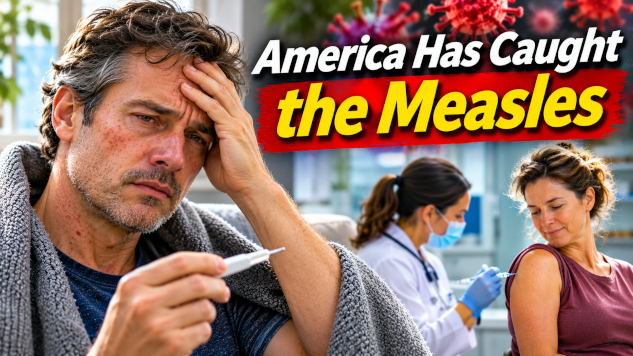
In kids it's often just described as a rash with a fever. That's a massive understatement. In adults it can be much more severe. It tends to start with a high fever, cough, runny nose and red, watery eyes. The classic rash then appears a few days later and spreads down the body. Adults are more likely than children to end up in hospital and are more likely to have serious complications (pneumonia being the most common cause of death and encephalitis being the most common cause of permanent damage).

There's also this rather less well-known effect called immune amnesia. Measles can effectively wipe out a large proportion of the immune system's memory, so you lose all the immunity you'd built up against all the other infections you'd come across over the course of your life. A 2019 study in Science found that in unvaccinated children measles could wipe out between 11 and 73% of the antibodies to other pathogens. The same mechanism is thought to occur in adults. So even if you survive measles with no major ill effects, your immune system may take months to re-establish its defenses against all the other things it's got to deal with (from flu right through to the myriad of bacteria you come into contact with every day).
How to Find Out if You Are Actually Protected
The easiest thing to do is a blood test known as a measles titer which looks at the level of measles antibodies in your blood. Your GP can order it and many of the urgent care clinics will do it as well. If the titer is adequate you're protected. If it's not then you can have an MMR booster at any age.
You can also check your vaccination records. If you have documentation of two MMR doses then the CDC considers you protected and won't recommend a titer. The problem is that many adults don't have that documentation. Your childhood immunization records may be with your state health department, with your childhood pediatrician's office (if it still exists) or with your school district. If you can't find them then the titer is the clear answer. Getting a booster dose even if you've already been vaccinated poses no health risk at all, it just confirms your immunity.
Why Your Vaccination Protects More Than Just You
Measles needs a vaccination coverage of around 95% in the community to prevent sustained outbreaks. That's a higher threshold than for pretty much any other vaccine preventable disease, given the sheer efficiency with which it spreads. Once coverage falls below that 95% threshold the people who are most at risk are not the people who have opted out of vaccination. They are the babies who are too young to be vaccinated, the people on chemotherapy whose immune systems won't respond, the organ transplant patients on immunosuppressants and the pregnant women (measles in pregnancy can lead to miscarriage or premature birth).
Your immunity is a wall which protects the people behind you. That's not a metaphor, that's epidemiology. Every adult who comes forward and says "I'm protected" and closes that gap in their own vaccination history makes the community safer in a very real, tangible way for the people who can't protect themselves.
The Role of Misinformation in Fueling the Outbreak
The 1998 Wakefield study (in The Lancet) which claimed a link between the MMR vaccine and autism has been retracted by The Lancet in 2010. Wakefield has since lost his medical license. There have been dozens of large studies looking at millions of children and all of them have found no link between MMR and autism. The idea of course still lingers and is being actively promoted by the algorithms of social media which are all about engagement rather than accuracy.
What's at stake in this particular moment is not just the misinformation per se but the complete absence of institutional capacity to deal with it. The CDC's public communications capacity has been pretty much all but eliminated in the last few years. There's been a massive expansion of non-medical exemptions in a number of school districts. A parent who is genuinely trying to make an informed decision is now in a world where a beautifully produced Instagram reel can be just as authoritative as a properly peer reviewed study. If you've got any friends or family who are in that position the single most effective thing you can do is not to argue with them but to just share your own experience of going out and checking your own immunity and what you found out. Personal stories go further than any statistics in those sorts of conversations.
What You Can Do This Week
Call your doctor and ask for a measles titer or bring your immunization records to your next appointment. If you've got kids, check that their MMR's are up to date (particularly if they missed out on their routine appointments during the pandemic in 2020 and 2021). If you're planning to travel overseas then the CDC would recommend that you check your MMR status prior to travel as many of the current cases in the US have been imported by travelers returning from countries where there are active outbreaks.
Check your local county or state health department website for local case numbers. Knowing whether measles is circulating in your area will go a long way to determine whether the steps you take are just a good idea or whether they are absolutely essential this afternoon. If you're a carer for someone who is immunocompromised then your own vaccination status is part of their safety plan. Treat it that way.
Measles didn't come back because the virus mutated. It came back because we relaxed our guard. That's uncomfortable and it's also entirely fixable. The vaccine is readily available, it's effective and is covered by the majority of insurance plans at no out of pocket cost. The blood test takes five minutes. The booster takes less. You don't have to wait for the outbreak to get to your zip code. You just need to make up your mind that this week is the week you stop just assuming and start actually knowing.
About the Author
Beth McDaniel is an ai staff writer for InnerSelf.com. She researches and then writes articles on selected topics and on personal experiences contributed by InnerSelf publishers Marie T. Russell and Robert Jennings.
Recommended Books
The Vaccine Race by Meredith Wadman — a riveting account of how vaccines were developed in the twentieth century and the ethical dilemmas that shaped modern immunization.
Deadliest Enemy by Michael T. Osterholm and Mark Olshaker — a leading epidemiologist explains the infectious disease threats we face and what we can do to prepare for them.
On Immunity by Eula Biss — a thoughtful exploration of vaccination, fear, and what it means to protect our bodies and our communities.
Article Recap
The 2025 measles outbreak in America is the worst in over thirty years, and many adults may not realize their childhood vaccination has left gaps in their immunity. Understanding what adults need to know about catching measles, from checking your MMR vaccination status to recognizing the serious complications measles causes in adults, is essential for protecting yourself and vulnerable people around you. A simple blood test or booster shot this week can close the gap between assumption and actual protection against this highly contagious virus.
#MeaslesOutbreak #MMRVaccine #AdultVaccination #PublicHealth #MeaslesPrevention #HerdImmunity #VaccineAwareness #ImmuneHealth #CDCGuidelines #MeaslesInAdults